GEO Pricing
How Much Does AI Visibility Cost? GEO Pricing Guide for 2026
Why AI Visibility Pricing Looks So Inconsistent
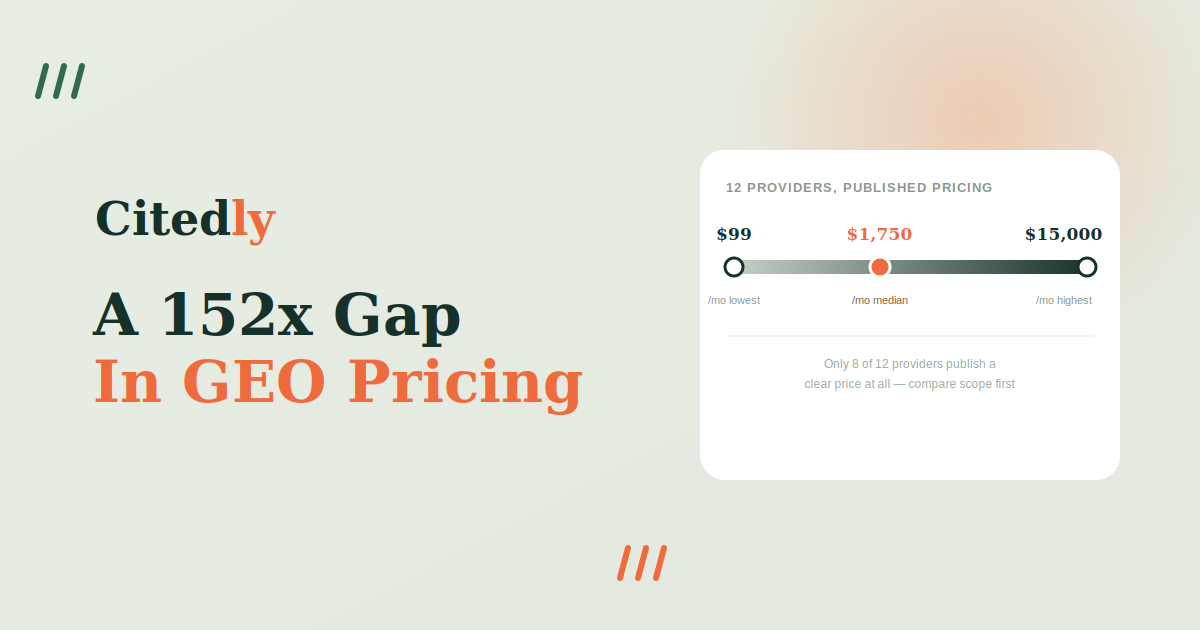
AI visibility pricing looks wildly inconsistent because buyers are comparing completely different services under the same label. One provider charges $99 for an audit, another $500 for tracking software, another $5,000 a month for strategy, content, technical implementation, off-site authority, and reporting.
So the better question isn't "How much does GEO cost?" It's "What am I actually paying for, and which parts of AI visibility are included?" A complete GEO program can cover crawlability and indexing, answer-first content, schema, brand entity consistency, third-party mentions, comparison content, citation tracking, and ongoing updates as AI answers shift.
The price rises or falls with how many of those layers a provider handles, how competitive your category is, how many pages or locations are involved, and whether they're simply measuring visibility or doing the work to improve it.
GEO Pricing at a Glance
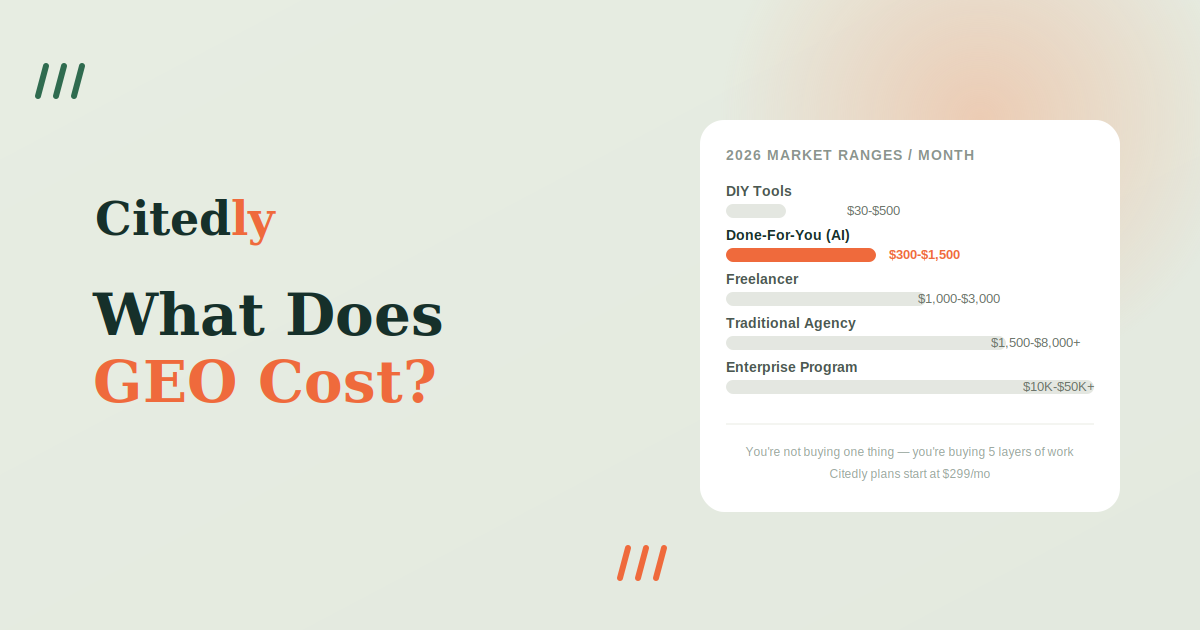
The fastest way to understand GEO pricing is to separate software, consulting, agency work, and done-for-you execution. These are practical 2026 market ranges, not fixed industry rates.
| Service type | Typical 2026 cost |
|---|---|
| AI visibility audit | $99–$2,000 one-time |
| DIY AI visibility software | $30–$500/month |
| GEO freelancer or consultant | $1,000–$3,000/month |
| Traditional GEO / AI SEO agency | $1,500–$8,000+/month |
| Enterprise GEO program | $10,000–$50,000+/month |
| AI-powered done-for-you service | $300–$1,500/month |
How Much Does GEO Cost in 2026?
Most businesses comparing providers should expect generative engine optimization pricing between roughly $1,500 and $8,000 per month through a traditional agency. Smaller businesses can now find done-for-you AI search optimization in the $300–$1,500 range, while enterprise GEO can reach $10,000–$50,000+ per month when scope includes hundreds of pages, multiple markets, original research, digital PR, and dedicated reporting.
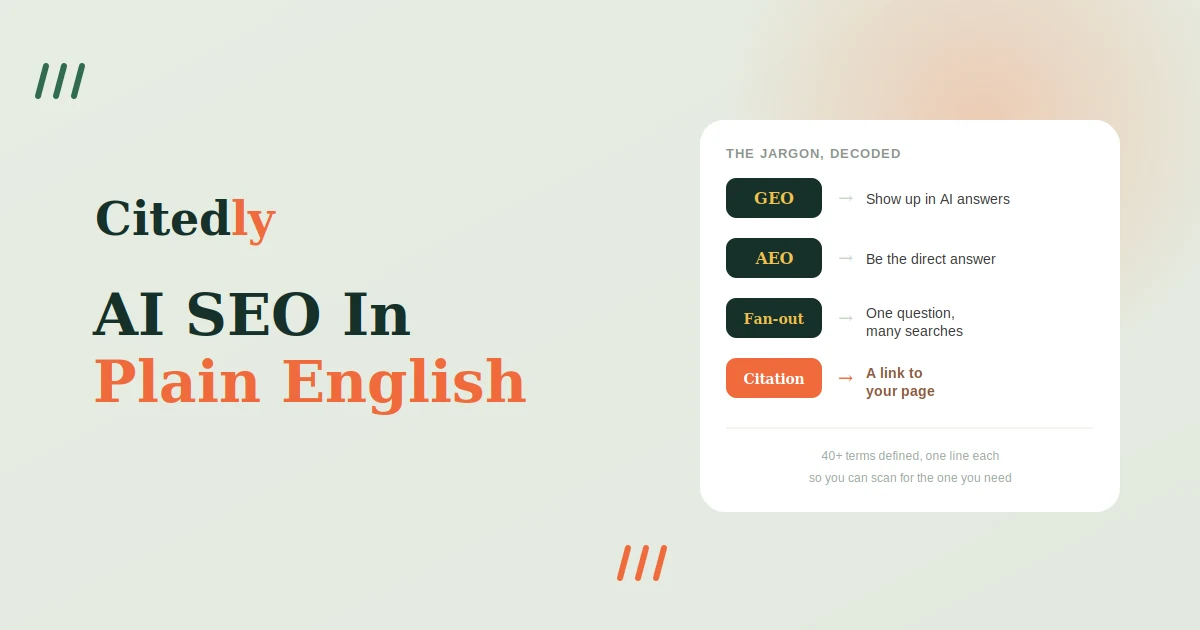
In other words, AI visibility cost depends less on a single "GEO rate" and more on how much execution is included. If you're still new to the category, start with our guide to what AI citations are — it explains what businesses are actually trying to earn before you compare prices.
What "AI Visibility" Actually Costs (You're Not Buying One Thing)
A quote is usually the sum of five moving parts:
- Technical setup — making sure AI crawlers and search engines can access, render, and index your site.
- Content optimization — restructuring pages so AI can extract direct, self-contained answers.
- Entity building — making your business a consistent, recognizable entity across the web.
- Off-site authority — earning the mentions, reviews, and third-party corroboration AI relies on.
- Tracking — measuring where you're cited, mentioned, or replaced by competitors, engine by engine.
Two quotes with the same monthly number can cover completely different slices of that work. A $2,000 plan that's mostly reporting is not equivalent to a $2,000 plan that includes content changes, technical implementation, and recurring authority work. Comparing providers on price alone is a budgeting mistake.
The Four Ways to Get Cited by AI, and What Each Costs
| Path | Typical cost | Best for | The catch |
|---|---|---|---|
| DIY tools | $30–$500/mo | Hands-on owners with time to execute | Tools track and suggest; you do the work |
| Freelancer / consultant | $1,000–$3,000/mo | One-off projects or specific fixes | Quality and capacity vary |
| Traditional agency | $1,500–$50,000/mo | Mid-market to enterprise brands | Higher retainers and broader teams |
| Done-for-you, AI-powered | $300–$1,500/mo | SMBs wanting execution handled | Newer category; compare deliverables carefully |
What Do Different GEO Budgets Actually Buy?
A monthly price makes more sense when you translate it into scope. These aren't guarantees, but they show how deliverables usually expand as budget increases.
| Monthly budget | What you should expect |
|---|---|
| $300–$750/month | Core page improvements, basic technical fixes, entity consistency, targeted citation work, ongoing tracking |
| $1,000–$2,500/month | More pages, deeper technical implementation, recurring authority work, competitor monitoring, stronger reporting |
| $3,000–$8,000/month | Larger content programs, digital PR or outreach, multiple markets, more intensive strategy, broader measurement |
| $10,000+/month | Enterprise-scale content, multiple products or locations, original research, complex integrations, PR, dedicated teams |
What Makes AI Visibility Cost More (or Less)?
Within any delivery model, your actual cost is driven by scope:
- Number of pages — optimizing 5 high-value pages costs far less than restructuring 200.
- Number of AI engines — covering ChatGPT, Gemini, Perplexity, and Google AI Overviews requires broader testing.
- Technical health — a site AI crawlers can't read needs foundational work before content optimization matters.
- Competition — crowded, high-value categories require more authority and corroboration.
- Locations and markets — franchises and multi-location businesses add entity, content, and tracking complexity.
- Off-site authority — recurring mentions, reviews, and third-party presence are usually the biggest ongoing cost.
That last point matters because technical fixes are finite, while earning the mentions that get you cited is ongoing. Ahrefs also found that branded web mentions correlate far more strongly with AI visibility than raw backlink volume across its study of 75,000 brands.
GEO vs. SEO Pricing: What Are You Paying For?
SEO and GEO overlap, but they aren't the same deliverable. Traditional SEO optimizes for rankings and organic traffic. GEO adds a second layer: whether AI systems understand, cite, mention, and recommend your brand.
| Area | SEO | GEO / AI visibility |
|---|---|---|
| Primary outcome | Keyword rankings and organic clicks | AI citations, mentions, recommendation visibility |
| Authority focus | Backlinks and domain-level signals | Brand mentions, corroboration, entities, source trust |
| Optimization surface | Primarily search engines | Search engines plus AI answer engines |
| Content structure | Search intent and SERP relevance | Answer-first, extractable, entity-rich content |
| Measurement | Rankings, impressions, clicks | Prompt visibility, citation share, share of model, accuracy |
The distinction is measurable: Ahrefs analyzed 15,000 prompts and found only about 12% of AI-cited URLs appeared in Google's top 10 for the same prompt. For the deeper explanation of how the authority signals differ, see citations vs. backlinks.
A Simple Way to Estimate Your GEO Budget
A practical budget is a function of six variables: content scope, technical work, number of AI engines, competitive authority, off-site visibility, and ongoing tracking.
Example: local or small business
- 5–20 priority pages
- One primary market or location
- Four to five major AI engines
- Moderate competition
- Basic review and mention building
- Monthly tracking
This scope usually fits within a few hundred to low four figures per month, depending on how much is done for you.
Example: enterprise or multi-location brand
- Hundreds of pages
- Multiple products, locations, or countries
- Several AI engines and search surfaces
- Competitive category
- Research, PR, and third-party authority campaigns
- Dedicated reporting and integrations
This is where GEO pricing reasonably moves into five figures per month, because the execution, coordination, and measurement load is fundamentally different.
The Hidden Cost Traps to Watch For
The fastest way to overpay isn't a high sticker price. It's paying for the wrong thing.
The dashboard trap
Some AI visibility products are primarily monitoring dashboards. They show you where your brand is absent without doing the work to fix it. Tracking matters, but you can track much of it yourself before paying premium prices for measurement alone.
The single-number quote
If a proposal gives you one monthly number with no page count, technical scope, off-site work, or reporting cadence, ask for an itemized breakdown. Vague scope is where overcharging hides.
The one-time-fix illusion
AI answers, sources, and competitors change. A provider that performs one setup and disappears isn't managing an ongoing visibility system — and that pattern is a common reason businesses end up asking why AI isn't citing their website.
The simple test: if a provider can't tell you what they're changing, where they're building authority, and how they'll prove visibility improved, the pricing is probably as vague as the plan.
Is AI Visibility Worth the Money? The ROI Math
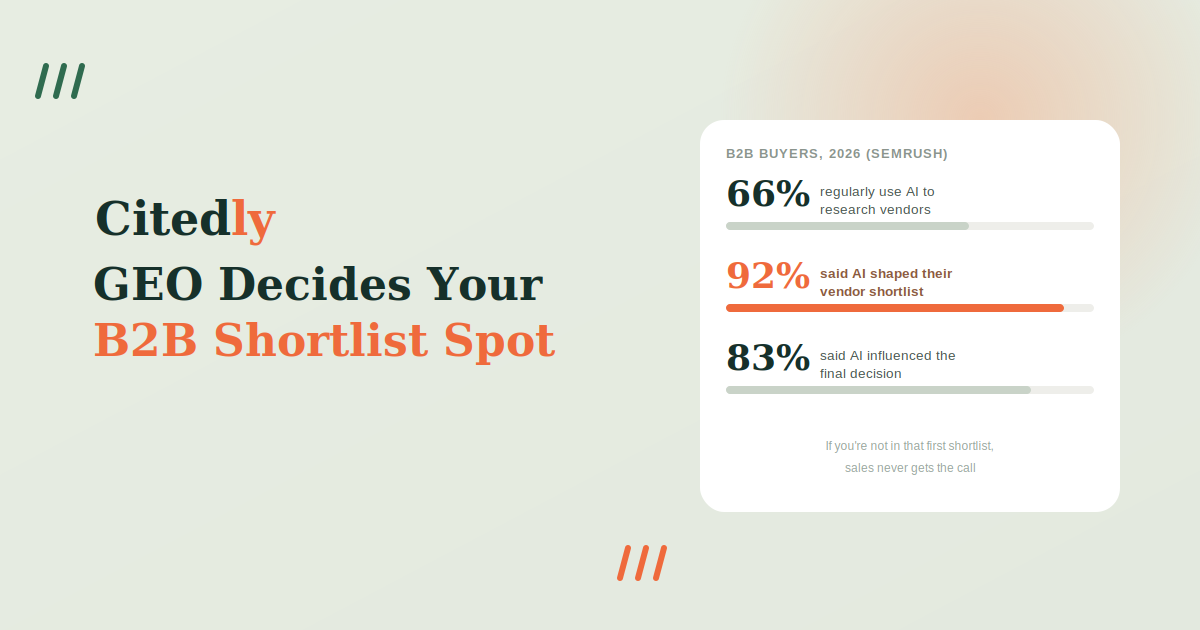
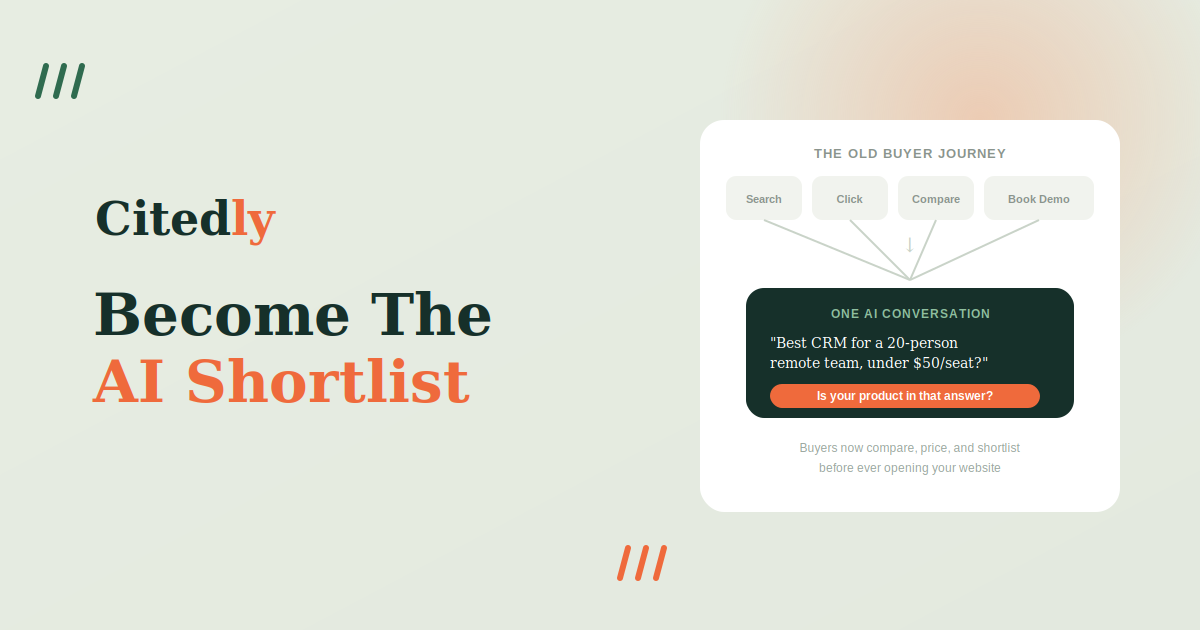
The case for AI visibility is less about traffic volume and more about where buying decisions are moving. AI answers compress research by recommending a short list of providers directly inside the response.
Traditional search is also under structural pressure: Gartner predicted search engine volume would drop 25% by 2026 as users shift toward AI chatbots and virtual agents. And AI visibility doesn't mirror Google rankings — that ~12% overlap means a budget spent defending rankings doesn't automatically buy AI visibility. For more market context, see our AI search statistics roundup.
The real budgeting question isn't "What does GEO cost?" It's "What does it cost if AI keeps recommending a competitor instead of us?"
How Much Should a Small Business Actually Spend on GEO?
A small or local business usually doesn't need a $5,000 retainer — those numbers are designed for larger organizations with extensive content libraries and several markets. For a typical SMB, the budget should concentrate on the few activities that directly move AI visibility:
- Make sure AI crawlers and search engines can read and index the site.
- Restructure the highest-value pages into clear, answer-first content.
- Build consistent business information, reviews, and mentions on trusted sources.
- Track citations and mentions across the engines your customers actually use.
If your content is hard for AI to extract, start with structuring content for AI. If you're focused on one engine in particular, getting cited by ChatGPT and showing up in AI Overviews cover those surfaces specifically.
How to Evaluate a GEO Agency Before You Pay
GEO is new enough that two providers can use identical terminology while delivering completely different work. Before signing, ask these seven questions.
1. Which AI engines do you actually optimize for?
Don't accept "AI search" as the answer. Ask whether they work across ChatGPT, Google AI Overviews, AI Mode, Gemini, Perplexity, Claude, and Copilot — engines retrieve and cite differently, and visibility genuinely varies by platform.
What you want to hear: a clear list of engines included and how strategy or measurement changes across them.
2. Are you only tracking visibility, or executing the fixes?
Many platforms show where you're mentioned and which competitor appears instead. Useful — but not the same as improving visibility. Ask whether they'll rewrite pages, add schema, fix crawlability, improve entity consistency, build comparison content, and earn third-party mentions.
What you want to hear: measurement plus implementation, not a dashboard followed by homework for your team.
3. What exactly is included every month?
A recurring retainer should correspond to recurring work: pages optimized or created, technical implementation, schema and entity work, third-party authority, competitor monitoring, reporting cadence.
What you want to hear: a defined monthly scope with specific outputs, responsibilities, and limits.
4. How do you build third-party authority?
Ask about reviews, industry roundups, comparison pages, Reddit and community mentions, directories, and consistent external brand information. If the entire strategy happens on your own domain, it's missing how AI corroborates brands.
What you want to hear: a credible process for external corroboration, not just more blog posts.
5. How will you measure whether the work is working?
Rankings and backlinks aren't enough. Ask whether they measure brand mentions, linked citations, citation share, share of model, competitor presence, AI referral traffic, brand accuracy, and visibility by engine.
What you want to hear: a repeatable prompt set, engine-by-engine tracking, and reporting that ties gaps to actions.
6. What happens after the initial optimization?
Answers change, sources shift, competitors publish, new surfaces gain adoption. Ask what happens in month two: page refreshes, expanded buyer-query content, correcting inaccurate AI answers, competitor monitoring, more third-party presence.
What you want to hear: an ongoing improvement loop, not a one-time setup billed monthly.
7. Can you show me exactly what my money is paying for?
You should be able to see what portion of scope covers each workstream. That makes a $500, $2,000, and $5,000 proposal comparable without the headline price distracting you.
| Workstream | What should be clear |
|---|---|
| Technical | Crawlability, indexing, schema, implementation |
| Content | Pages created or optimized each month |
| Entity | Business information and brand consistency |
| Authority | Reviews, mentions, roundups, external presence |
| Tracking | Engines, prompts, competitors, reporting |
| Strategy | What changes based on the data |
How We Compiled These GEO Pricing Ranges
This guide combines publicly discussed pricing patterns across AI visibility software, consultants, agencies, and done-for-you providers with the service scopes commonly attached to those price points. Pricing changes quickly and many agencies don't publish rates, so treat these ranges as budgeting guidance rather than fixed market averages.
Pricing data last reviewed: August 2026.
Where Citedly Fits (and Why It's a Fraction of Agency Pricing)
Citedly is built for the gap between software-only dashboards and high-retainer GEO agencies. It combines the core execution work — technical fixes, answer-first content, entity building, off-site mentions, and per-engine tracking — in a model designed for businesses from local companies to larger brands.
| Plan | Price | Best for |
|---|---|---|
| Starter | $299/mo | Local and small businesses getting into AI answers for the first time |
| Growth ⭐ | $499/mo | Growing SMBs competing for buyer queries across multiple engines |
| Authority | $799/mo | Established businesses targeting comparison and category searches |
| Enterprise | Custom | Multi-location brands, franchises, and competitive categories |
No contracts. See the full pricing breakdown, or book a free call and we'll tell you what your business needs — and what it doesn't.
Much of the work — reviews, listings, brand consistency — is exactly what makes ChatGPT recommend your business, so budget for it as one program.
Frequently asked questions
How much does it cost to get cited by AI?
Anywhere from about $30/month for DIY tools to $50,000+/month for complex enterprise programs. Many traditional GEO agencies fall around $1,500–$8,000/month, while newer AI-powered done-for-you services start in the low hundreds per month.
How much does GEO cost per month?
For most SMB and mid-market buyers, GEO pricing commonly falls between a few hundred and several thousand dollars per month. The biggest variables are page count, technical complexity, competition, off-site authority work, and how many AI engines are tracked.
Why is GEO priced separately from SEO?
Because the work and measurement differ. SEO optimizes for rankings and search traffic; GEO also targets AI citations, brand mentions, entity understanding, answer extraction, and visibility across multiple engines.
Do I need an expensive GEO agency to show up in AI?
No. Large retainers are usually designed for enterprises with broad scope. A local business or SMB can start with a focused program covering its most important pages, entity signals, mentions, and tracking.
What should a fair AI visibility quote include?
Page-level content work, technical implementation, the AI engines covered, off-site authority work, tracking metrics, reporting cadence, and what happens every month after setup.
Is AI visibility worth it for a small business?
It can be when customers already use AI tools to compare providers, products, or local services. The value is being included in the shortlist AI presents at the moment a buyer is researching.
Can I do GEO myself?
Yes. You can handle crawlability checks, answer-first content, schema, third-party presence, and manual prompt tracking yourself. The trade-off is time and consistency, which is why some businesses choose software or a done-for-you service.
See Where AI Puts Your Business Today
Run your real buyer prompts across five AI engines and find out whether you get named, free, in about 60 seconds. Or book a call and we'll walk you through it.
Keep exploring
Read More from Citedly