Google Playbook
How to Show Up in Google AI Overviews
What Are Google AI Overviews?
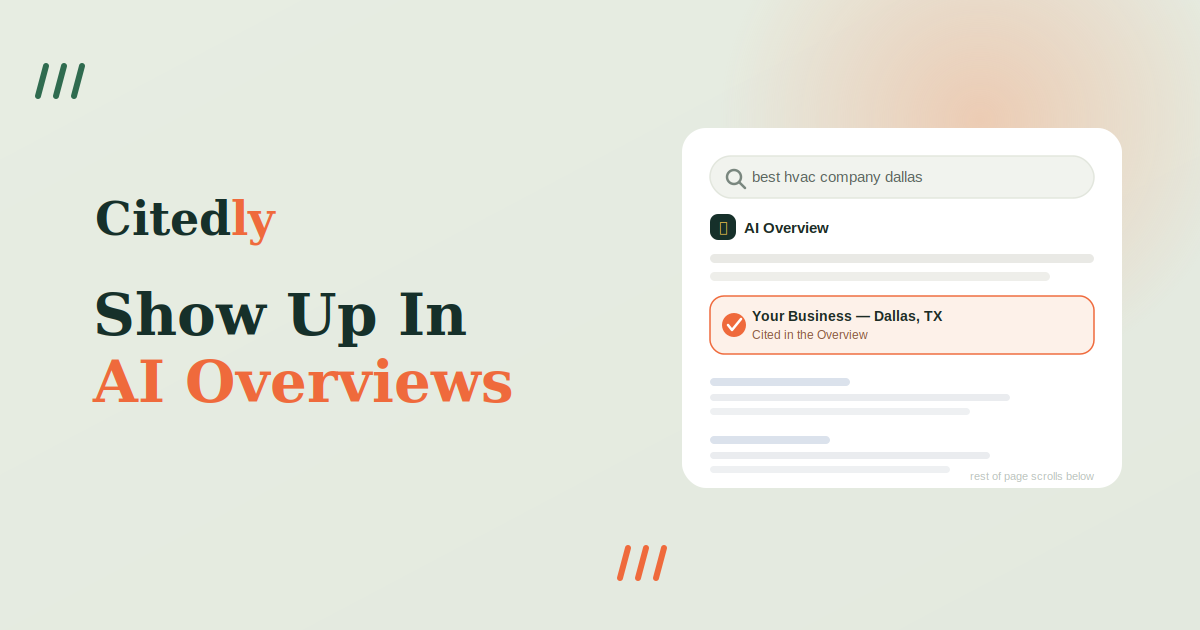
Google AI Overviews are the AI-generated summaries that appear at the top of many search results, answering the query directly before the list of blue links. Google's Gemini models build them by gathering information from multiple ranking pages and stitching the common points into one answer, with source links attached.
The key thing to understand: an AI Overview isn't a separate search engine. It's a layer on top of Google's normal results. The same pages that rank organically are the raw material the summary is built from. That single fact shapes everything about how you optimize for AI Overviews, and it's why the work overlaps heavily with good SEO rather than replacing it.
A quick note on terms, since they get mixed up:
- AI Overviews — the summaries inside normal Google search results (the focus of this guide).
- AI Mode — Google's separate, fully conversational AI search experience.
- Featured snippets — the older single-source answer box; the top of an AI Overview is essentially its evolved, multi-source successor.
Why Showing Up in Google AI Overviews Matters
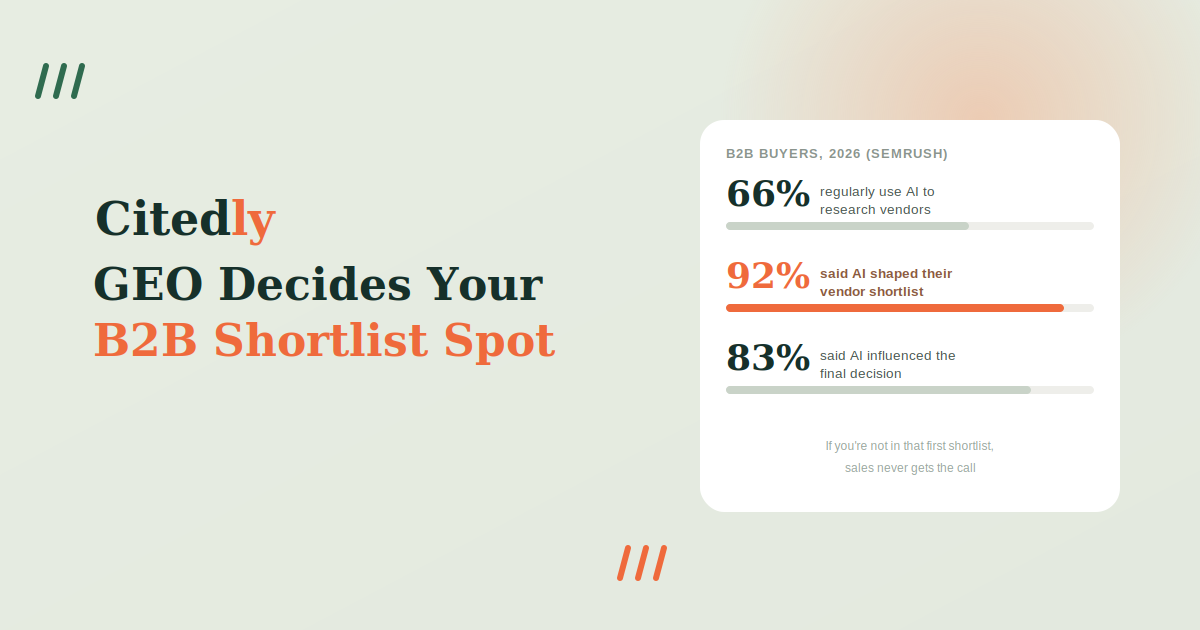
Showing up in Google AI Overviews matters because they've become the first thing many searchers see, and they absorb the attention that used to flow to organic links. When an Overview answers the question, most people never scroll.
The numbers make the stakes concrete:
- Overviews appear on roughly 13% of U.S. searches and rising, according to Semrush Sensor — later tracking puts it closer to 25% (see the current AI search statistics).
- When an AI Overview is present, users click a traditional result just 8% of the time, versus 15% without one — and click a link inside the Overview only about 1% of the time.
- Overviews are spreading beyond information: Semrush found the keywords that trigger them shifted from 89% informational in late 2024 to about 57% a year later, meaning commercial and buying queries increasingly show them too.
The takeaway isn't "traffic is dying." It's that visibility has moved into the Overview. If your business is named or cited there, you get the exposure; if it isn't, a competitor absorbs it.
Worth separating from classic SEO in your head, too — an Overview citation isn't a backlink and doesn't behave like one. This is the same underlying shift we cover in what AI citations are and how to get cited by AI; Overviews are simply the Google-specific version of it.
How Google AI Overviews Actually Work
AI Overviews work by summarizing what already ranks. When someone searches, Google's Gemini model looks at the top results, extracts the points that overlap across sources, and composes a single answer from what it sees most consistently.
It Builds From Ranking Pages
There's no separate AI crawler or hidden index for Overviews. If five sources say roughly the same thing and you're one of them, you're likely to be included. If you're not ranking for the query at all, you're not in the running. This is also why a business can rank fine on Google but still feel invisible in ChatGPT — that runs on separate mechanics, covered in how to get cited by ChatGPT.
It Uses Query Fan-Out
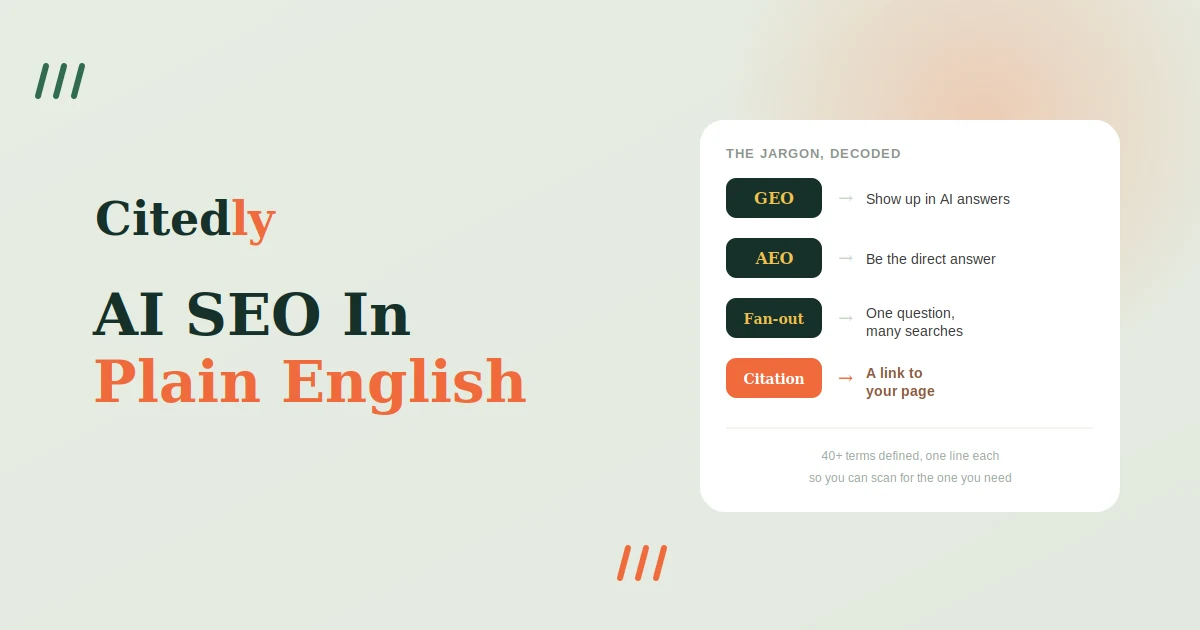
For many searches, Google doesn't run just your query. It runs a fan-out — several related sub-searches — and assembles the Overview from all of them. That's why a page can appear in an Overview for a question it doesn't directly target: it answered one of the sub-questions cleanly. Practically, this rewards covering a topic thoroughly across several pages, not just optimizing one.
Google's own guidance is refreshingly blunt: apply the same foundational SEO best practices for AI features as you do for Search overall. There is no separate "AI Overview algorithm" to game — there's ranking, plus structure that makes your answer easy to lift.
How to Show Up in Google AI Overviews: 7 Steps
Here's the sequence that actually earns AI Overview inclusion, ordered so the foundation comes first. None of it requires being a household name — just being rankable and extractable.
1. Get Crawlable, Indexable, and Ranking First
Because Overviews are built from organic results, everything starts with ranking. Confirm the basics aren't blocking you:
- No accidental noindex tags or robots.txt rules on the pages you want surfaced.
- No 4XX errors or broken pages where your answers live.
- A clean site structure and submitted sitemap so Google can crawl efficiently.
If a page can't rank, it can't appear in an Overview. Fix the foundation before anything else. For the full list of what silently blocks AI visibility, see why AI isn't citing my website.
2. Answer the Question in the First 40–60 Words
The top of an AI Overview behaves like an evolved featured snippet: Google looks for a clean paragraph it can lift and use as the opening of its answer. So give it one. Under each heading, state the direct answer immediately — no wind-up — in roughly 40 to 60 words, then expand below. Shorter feels incomplete; longer gets trimmed. Our full method for this is in how to structure content for AI.
3. Structure Content as Lists, Steps, and Tables
AI Overviews are assembled from discrete, liftable chunks, which is why list-based content shows up so often. When Google builds a summary, a bullet or a table row is already a clean standalone unit it can use as-is, while a paragraph has to be interpreted and rewritten. So format for extraction:
- Use numbered lists for sequences and steps.
- Use bullet points for features, options, and takeaways.
- Use tables for comparisons, pricing, and specs.
- Add Key Takeaways and FAQ sections, which match the summary format exactly and can earn you multiple pulls from one page.
4. Target Long-Tail and Question Keywords
Broad head terms often just return normal links; specific, longer queries trigger AI Overviews far more often, because Google is more confident generating a summary for a precise question. Target the way people actually ask:
| Query Type | Triggers an Overview? | Example |
|---|---|---|
| Broad head term | Less often | "CRM software" |
| Long-tail question | Much more often | "best CRM for a small law firm" |
| Local + intent | Increasingly | "AI visibility service for med spas in Austin" |
Mirror these phrasings in your H2s and H3s. A fast way to find them: ask ChatGPT to list the questions and comparisons around your topic, then validate volume and difficulty in a keyword tool.
5. Add FAQ, HowTo, and Article Schema
Schema doesn't change your content — it labels it, so Google can tell what's a question, what's an answer, and what's a step without guessing. That makes clean extraction into an Overview more likely. Prioritize FAQPage, HowTo, and Article schema, and make sure the markup matches your visible text exactly.
6. Win the Third-Party Listicles (for Commercial Queries)
For commercial searches like "best" or "top" services, ranking your own page usually isn't enough — Google pulls those Overviews largely from third-party roundups and comparison pages. So your brand needs to appear on the listicles that already rank:
- Get included in "best [your category]" and "top [your service]" roundups.
- Earn brand mentions and links from sites Google already trusts for the query — and note that mentions now outweigh backlinks as an AI-visibility signal.
- Prioritize presence over pure authority — showing up across several relevant pages is what moves Overview inclusion.
This off-page presence is often the deciding factor for buyer-intent queries, and it's the hardest piece to fake.
7. For Local Businesses, Feed the Local Signals
For location-based queries, Google weighs local signals when building the Overview. A complete, consistent Google Business Profile, accurate name-address-phone details across directories, and genuine reviews all raise your odds of being the named local recommendation. Name your service and your city in your content, so a query like "best HVAC company in Dallas" has something specific to match.
What Google AI Overviews Pull In vs Skip
A quick gut-check for any page you want surfaced.
| AI Overviews Tend to Pull | AI Overviews Tend to Skip |
|---|---|
| Pages already ranking in the top 10–20 | Pages that don't rank for the query |
| A clean 40–60 word answer under the heading | Answers buried below long intros |
| Lists, steps, and tables | The same facts hidden in prose |
| Long-tail, question-style pages | Broad pages with no specific answer |
| Brands present on trusted third-party listicles | Businesses appearing only on their own site |
| Pages with FAQ/HowTo/Article schema | Unlabeled, unstructured pages |
Rank first, then make your answer the easiest clean chunk on the page to lift.
— The throughline of every AI Overview win we've seen
How to Check If You're Showing Up in AI Overviews
You can't manage what you don't measure, and Overview data is bundled into your normal reporting. A few ways to track it:
- Google Search Console: Click data from Overviews is folded into your Performance report (Google doesn't break it out separately yet), so watch impressions and position on your target queries.
- Manual checks: Search your priority queries and note whether an Overview appears, whether you're cited, and which competitors are.
- Rank tools with an AI Overview filter: Several SEO platforms now flag which of your keywords trigger Overviews and whether you appear.
For the full measurement system across every AI engine, including how to calculate your share of model against competitors, see how to track your AI citations. And remember Overviews are one surface among several: being cited by ChatGPT runs on different mechanics entirely, covered in how to get cited by ChatGPT.
Let Citedly Handle Your AI Overview Visibility
Running all of this — ranking, answer-first structure, schema, long-tail targeting, and the off-page listicle work — takes real time, and it's easy to let slip once you're back to running the business.
Citedly handles it for you:
- Get your key pages ranking and structured for extraction
- Add and maintain FAQ, HowTo, and Article schema
- Target the queries that actually trigger Overviews
- Build the third-party presence Google pulls from
- Track which queries start showing your business
Built for small and local businesses, from $299/month with no contract. See what's included in our plans, made for small businesses to enterprises — or simply book a free call and we'll guide you on what's best after auditing your business profile.
Frequently asked questions
How do I show up in Google AI Overviews?
Rank in Google's organic results first, then make your content easy to extract: answer the question in the first 40–60 words, use lists and tables, target long-tail question keywords, add FAQ and HowTo schema, and earn mentions on the third-party listicles Google pulls from for commercial queries.
Do AI Overviews use my Google ranking?
Yes. AI Overviews are built on top of Google's existing organic results, not a separate index. If you're not ranking in the top results for a query, you won't be pulled into its Overview.
How are AI Overviews different from featured snippets?
A featured snippet pulls one answer from a single page. An AI Overview generates a summary from multiple sources at once and attaches links to several of them. The top of an Overview is essentially an evolved, multi-source featured snippet.
Does schema help with AI Overviews?
Yes, indirectly. Schema doesn't force inclusion, but FAQPage, HowTo, and Article markup label your content so Google can extract the right sections cleanly, which makes inclusion more likely. Match the schema to your visible text.
Does llms.txt help with Google AI Overviews?
No. Google has not adopted llms.txt for AI Overviews, and it isn't a ranking or inclusion signal. Focus on ranking, answer-first structure, schema, and off-page presence instead.
How often do AI Overviews appear?
On roughly 13% of U.S. searches as of early 2026, per Semrush Sensor, and increasingly on commercial and local queries — the mix shifted from about 89% informational in late 2024 to 57% a year later.
Why is my business ranking on Google but not showing up in ChatGPT?
Because they're built on different systems. Google AI Overviews pull from Google's own organic index, so ranking there gets you most of the way. ChatGPT draws from a different mix of sources and weighs things like entity clarity and third-party mentions more heavily — see how to get cited by ChatGPT for what changes when you're optimizing for that engine specifically.
See Where AI Puts Your Business Today
Run your real buyer prompts across five AI engines and find out whether you get named, free, in about 60 seconds. Or book a call and we'll walk you through it.
Keep exploring
Read More from Citedly