AI Visibility Guide
Google AI Mode Explained: How It Works and How to Appear
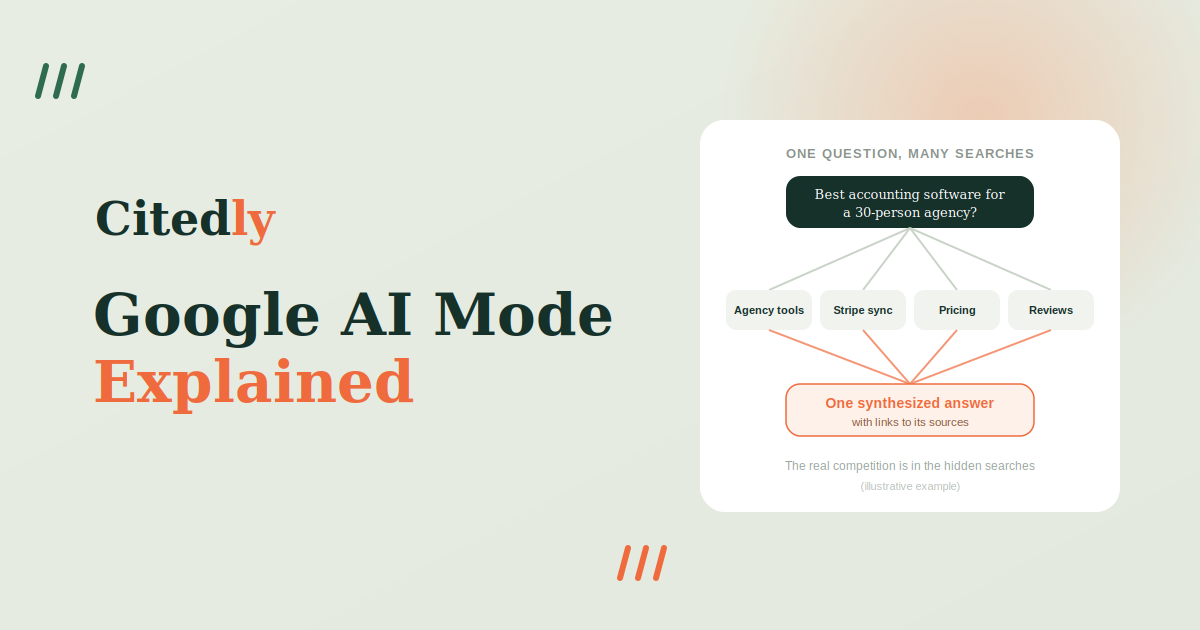
TL;DR: Google AI Mode is Google's conversational search experience. Instead of running one search and returning one list of links, it breaks a complex question into several related searches, retrieves information across them, and synthesises one answer. For your website this changes the unit of competition. You are no longer trying to rank once for the phrase someone typed. You are trying to be useful across enough of the hidden searches behind it that Google has reason to include you.
Why I Stopped Thinking of AI Mode as a Longer AI Overview
When I first started looking at Google AI Mode properly, my mistake was treating it as AI Overviews with more words. It is not.
The more useful way to think about it is that Google has changed the unit of search. In traditional search, one query returns one result set, and your job is to be high in it. In AI Mode, one question can trigger several searches behind the scenes, pull evidence from different places, and combine it into a single answer.
That changes what ranking even means, and most of the advice written about AI Mode has not caught up with it. This piece covers how the system actually works, what the independent data shows about which sources it picks, and what I would change on a site because of it.
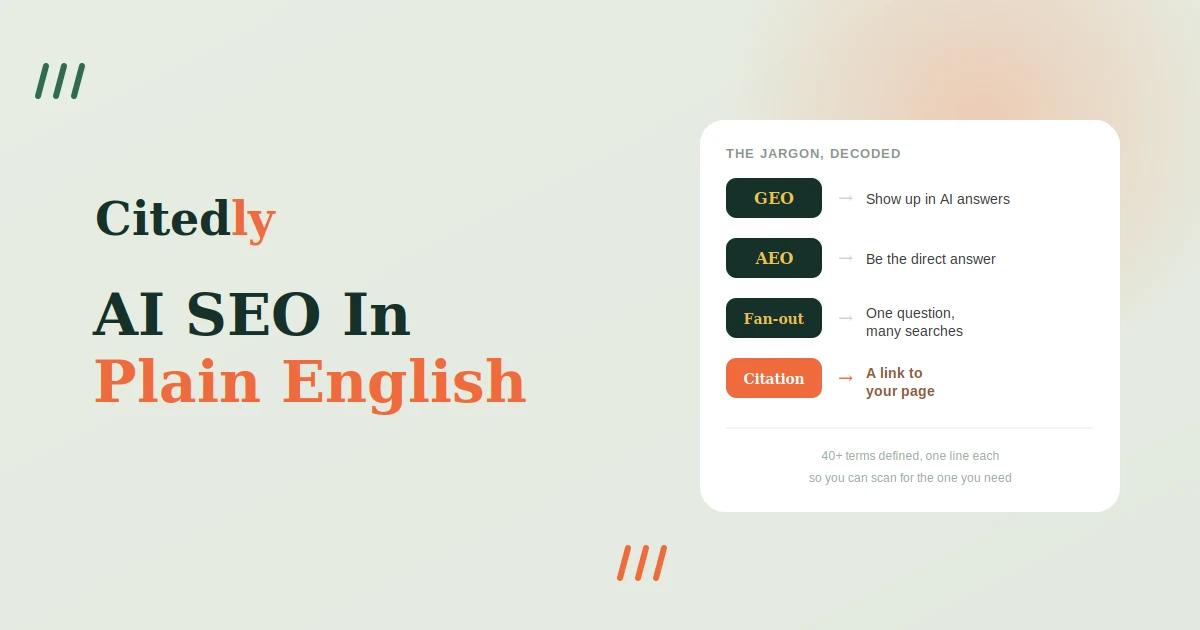
If the underlying vocabulary is new, our AI SEO guide defines query fan-out, citations, mentions and the rest. I am not going to redefine them here.
What Is Google AI Mode?
Google AI Mode is Google's conversational AI search experience, built for complex, multi-part and follow-up questions. It uses Gemini alongside Google's existing search infrastructure, including the index, the Knowledge Graph and shopping data, and it answers in prose with links to sources rather than a ranked list.
The scale is no longer experimental. In May 2026, Google reported that AI Mode had surpassed a billion monthly active users and that AI Mode queries had more than doubled every quarter since launch.
Two numbers from that same report matter more for what you publish.
- The average AI Mode search is triple the length of a traditional search query.
- Planning queries grew 80% faster than AI Mode queries overall over the preceding six months, with brainstorming queries growing 30% faster since launch.
People are not typing keywords into it. They are describing a situation and asking for a decision.
How Does Google AI Mode Actually Work?
AI Mode takes one question, breaks it into subtopics, runs many searches at once, retrieves passages from the results, and writes an answer from what it finds. Google calls the decomposition step query fan-out and describes it as "breaking down your question into subtopics and issuing a multitude of queries simultaneously on your behalf."
I find it easier to reason about as five stages, which is the model I use when auditing a site for AI Mode.
The Citedly AI Mode Retrieval Model
Prompt → Fan-Out → Retrieval → Evidence → Synthesis
| Stage | What happens | What you control |
|---|---|---|
| Prompt | The user describes a situation and asks a question | Nothing |
| Fan-Out | Google splits it into supporting questions | Which questions your site can answer |
| Retrieval | Pages are pulled for each supporting question | Whether you are crawlable and relevant |
| Evidence | Specific passages, facts and comparisons are selected | Whether your claims are specific and checkable |
| Synthesis | Some of that survives into the answer | Whether your brand is named alongside the fact |
What Does Fan-Out Look Like for a Real Buyer Question?
Take a question someone might genuinely type: "What is the best accounting software for a 30-person agency that integrates with Stripe and works internationally?"
Traditional SEO thinks about that visible phrase. AI Mode has to resolve several things before it can answer.
| The visible prompt | Supporting questions it implies |
|---|---|
| Best accounting software for a 30-person agency with Stripe, used internationally | Accounting software for agencies |
| Accounting software for 20 to 50 employees | |
| Which accounting tools integrate with Stripe | |
| Multi-currency and international support | |
| Pricing at that team size | |
| Reviews and alternatives |
That table is an illustration of the pattern, not a log of Google's actual queries. Google has described the technique but not published the query sets it generates.
The practical consequence is the whole point of this article. A page that only targets "best accounting software" competes for one of those rows. A site that genuinely covers pricing, integrations, team size, international use and alternatives can be retrieved for five of them.
How Is AI Mode Different From AI Overviews?
They are related but they do not behave the same way, and the difference shows up most clearly in which sources get used. AI Overviews summarise within a normal results page. AI Mode is a separate conversational experience built around follow-ups.
The most useful comparison I have found comes from Semrush, which studied 5,000 keywords and over 150,000 citations across Google Search, AI Mode, ChatGPT and Perplexity.
| AI Overviews | AI Mode | |
|---|---|---|
| Domain overlap with Google's top 10 | About 86% | About 54% |
| URL overlap with Google's top 10 | About 67% | About 35% |
| Average unique domains shown | Three | Seven |
| Typical query | Shorter, standard search | Longer, exploratory, multi-part |
| Follow-ups | Limited | Core to the experience |
Read the first two rows again, because that is the headline. AI Overviews largely reuse what already ranks. AI Mode frequently does not. Barely a third of the URLs AI Mode cited appeared in Google's top 10 for the same query.
The same study found AI Mode's results intersected with AI Overviews on 88% of domains but only 58% of URLs, meaning the two features often cite different pages from the same sites. It also found that in AI Mode results showing additional links, Reddit, YouTube and Facebook appeared in over 68% of results, ahead of traditional brand websites.
One caveat on all of this: that study is from July 2025 and AI Mode has changed since. Treat the direction as reliable and the exact percentages as a snapshot.
Where Does AI Mode Sit Against ChatGPT and Perplexity?
Roughly in the middle, which is the part I find most useful for planning. The same study measured all four surfaces against Google's top 10.
| Surface | Domain overlap with Google top 10 |
|---|---|
| Perplexity | Over 91% |
| Google AI Overviews | About 86% |
| Google AI Mode | About 54% |
| ChatGPT | Lowest of the four |
Perplexity behaves almost like a re-ranked Google. ChatGPT behaves least like it, which tracks with it building out its own retrieval, covered in ChatGPT's own search index. AI Mode sits between the two.
That spread is also why a single blended visibility score across engines hides more than it shows. If ChatGPT is where your buyers are, the ChatGPT citation playbook is a different job from this one.
Can You Rank Number One in Google AI Mode?
No, not in the traditional sense, and this is one of the most common questions I get. AI Mode generates a response with supporting sources rather than a numbered list, so there is no position one to win.
What you can measure instead:
- Whether your page is cited as a source.
- Whether your brand is named in the answer text.
- Whether you are recommended as an option rather than just referenced.
- How many of your target prompts return you at all.
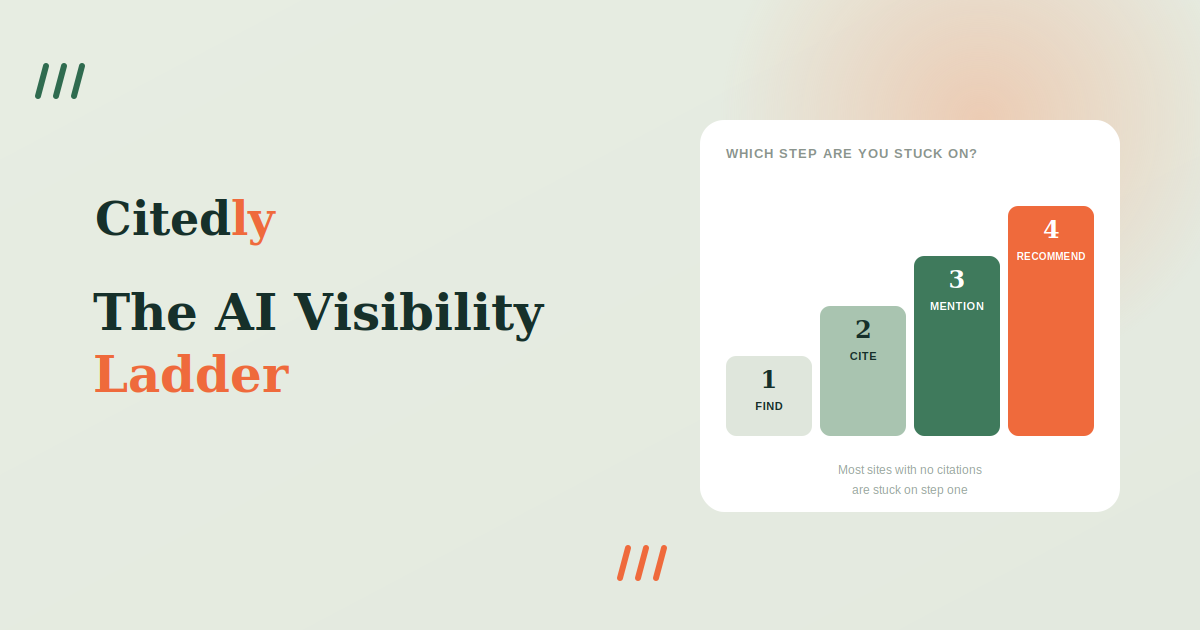
Those are different outcomes with different causes, which is why I use the AI Visibility Ladder to separate them. Being cited without being named is common enough to have its own name, and we cover it in ghost citations. The distinction between the two signals is in citations vs mentions.
For local and service businesses the recommendation outcome is usually the one that matters commercially, since a named suggestion is what sends someone to your door. That has its own dynamics, covered in local business AI recommendations.
How Do You Appear in Google AI Mode?
You appear by being eligible, retrievable and genuinely useful across the subtopics a question implies. There is no AI Mode switch to flip, and Google has been unusually direct about that.
What Does Google Say You Should Do?
In May 2026 Google published its guide to optimising for generative AI features, and the summary is that optimising for AI search is optimising for search, so it is still SEO.
Worth noting what Google says you do not need:
- No llms.txt file or other AI-specific text file.
- No special schema or markup for AI features.
- No breaking your content into small chunks, since Google says its systems can understand multiple topics on a page and surface the relevant part.
If you have been sold a GEO package whose main deliverables are those three things, that is worth a conversation with whoever sold it.
What Actually Helps?
This is where I would spend the effort, in order.
Start With Eligibility
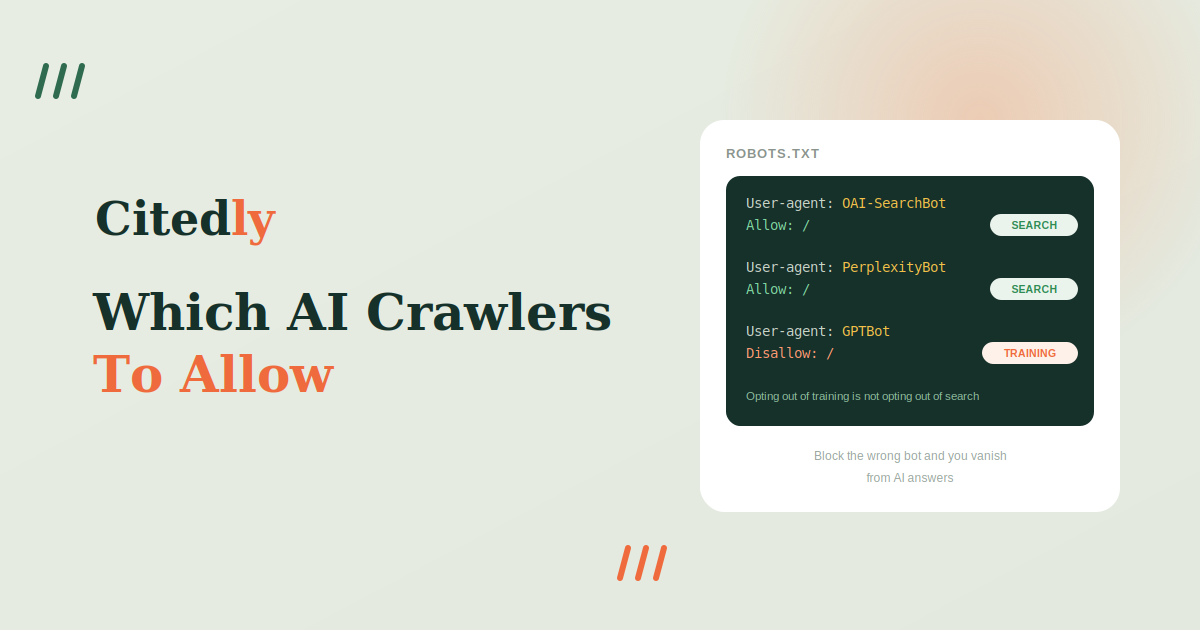
If Google cannot crawl, render and index the page, nothing else matters. That means content in the server HTML rather than only after JavaScript, no accidental blocks, and a clean sitemap. The equivalent checks for the other engines are in the AI crawlers reference, and when the problem is crawling or rendering, that is what technical SEO work is for.
Cover the Question, Not the Keyword
This is the fan-out consequence. If you want to appear for "best CRM for agencies," you also need real content on pricing at different team sizes, integrations, limitations, alternatives and use cases. Not as keyword variants, as genuinely separate answers.
The Semrush finding that AI Mode cites different URLs from the same domains supports this. Depth across a topic gives Google more entry points into your site than one well-optimised page does.
Answer Directly, Then Expand
Put the answer in the first sentence or two under each heading. Not because of a chunking ranking factor, which Google says is not a thing, but because a clear self-contained answer is easier to retrieve and quote. The method is in structuring content for AI.
Build Evidence, Not Claims
Specific numbers, named sources, dated figures, real comparisons and first-party data. A claim with a checkable fact attached is a cleaner unit for a model to lift than an assertion.
Strengthen Off-Site Corroboration
Given how heavily community platforms appear in AI Mode's additional links, a brand that exists only on its own website is at a structural disadvantage. Reviews, forum discussion, industry roundups and third-party coverage all feed this. We cover that in getting mentioned in AI.
Which Content Types Benefit Most From AI Mode?
Comparison and decision content, because that is what people use AI Mode for. Google's own usage data shows planning and brainstorming queries growing faster than the average, and the average query is three times longer than a normal search.
| Content type | Why it fits AI Mode |
|---|---|
| Comparison pages | "X vs Y" is a direct fan-out subtopic |
| Buying guides | "Best X for Y" matches how people phrase prompts |
| Pricing pages with real numbers | Cost is almost always part of the fan-out |
| Multi-factor recommendations | "Best X for a team of Y doing Z" needs several answers |
| Complex how-to content | Constraints and conditions suit a conversational query |
Thin category pages and keyword-variant blog posts do not fit this shape at all, which is worth bearing in mind if that is most of what your site is made of.
How Do You Track Whether You Appear in AI Mode?
You track it manually, because the reporting is not there yet. Search Console folds AI feature performance into overall Search reporting rather than breaking AI Mode out cleanly, so you cannot simply pull a report.
What works in practice:
- Build a fixed prompt set of 15 to 20 questions phrased the way people actually use AI Mode, which means long and situational, not keywords.
- Run them weekly and record whether you were cited, whether you were named, which URL appeared, and which competitors showed up.
- Watch the trend over a quarter rather than any single week, because results shift between runs.
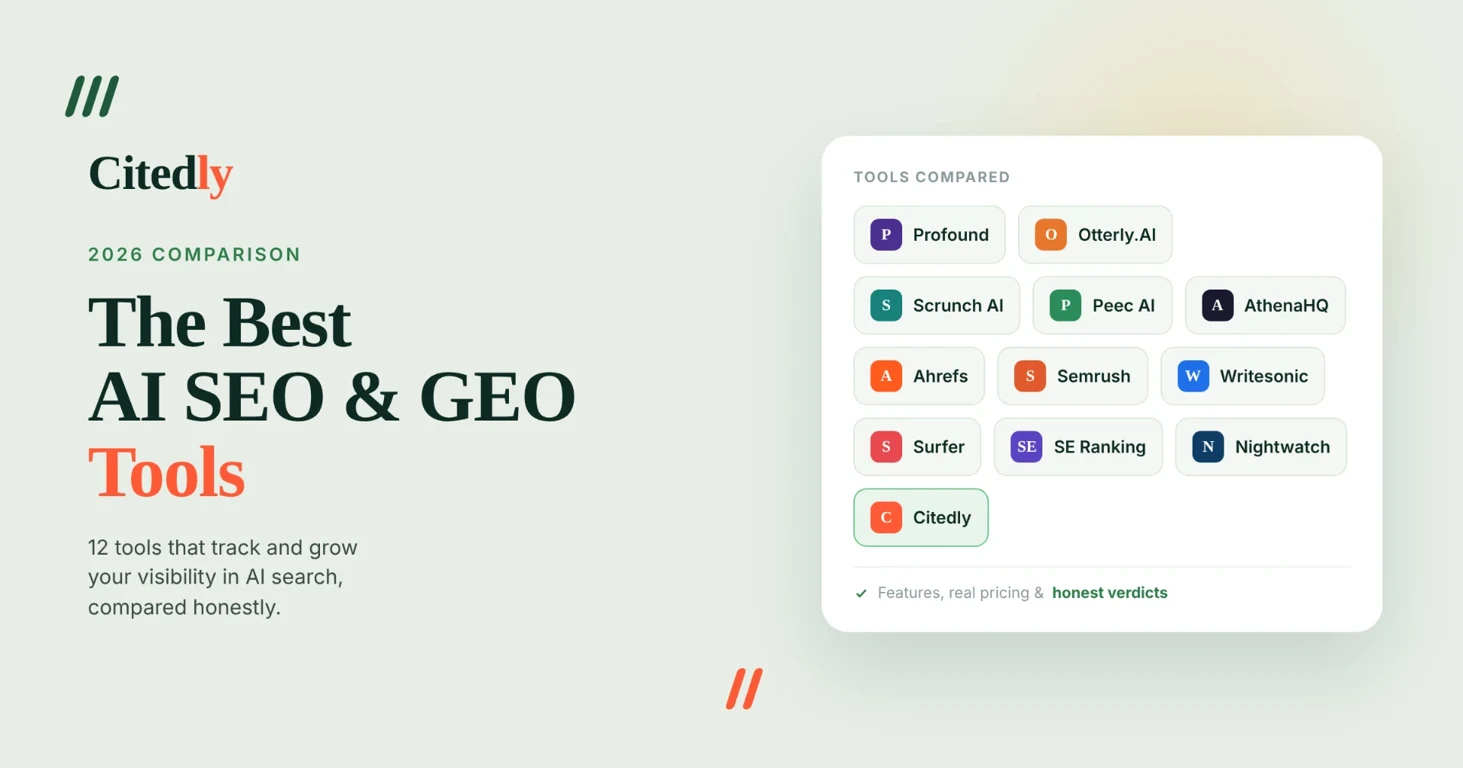
The full method, including the four metrics worth tracking, is in tracking your AI citations. If you would rather use software, we compared the options in 12 best AI SEO tools.
What Does AI Mode Change for SEO Overall?
My view is that AI Mode does not replace SEO. It multiplies the number of retrieval decisions happening between the question and the click. Your site still has to be crawled, indexed, understood and trusted. What changed is that Google now asks many more questions on the user's behalf before deciding which sources deserve to appear.
The shift in one line:
- Traditional SEO asks: can I rank for this query?
- AI Mode SEO asks: across all the questions hidden inside this query, where is my site useful enough to be retrieved?
There is a commercial cost to be honest about. A preregistered randomised experiment by researchers at the University of Pennsylvania and Northeastern University, published on arXiv in August 2026, assigned 1,100 US participants to standard Search, Google's default experience, or a forced AI Mode experience. AI Mode reduced click-through rates to external sites by 18.8 percentage points, while removing AI features raised them by 8.8 points.
That is the real trade. Fewer clicks are coming, and being named inside the answer is increasingly how the visit gets replaced. Our breakdown of why AI might skip your website covers what to do if you are not appearing at all.
How I Would Optimise a Site for One AI Mode Prompt
Rather than keep this abstract, here is the exercise I actually run. Take a prompt a real buyer would type, then work backwards through the fan-out instead of forwards from a keyword.
Say the prompt is: "What is the best payroll software for a 50-person remote company with contractors in five countries?"
The instinct is to write a page repeating that phrase. I would not. One page cannot credibly answer six different things, and Google does not need it to.
What I Would Check First
I would list the supporting questions, then audit honestly whether the site answers each one well enough to be retrieved for it.
| Supporting question | What the site needs | Common verdict |
|---|---|---|
| Remote payroll, how does it work | A clear explainer page | Usually exists |
| Paying international contractors | A dedicated page, not a paragraph | Usually missing |
| Which countries are covered | A specific, current list | Often buried in docs |
| Pricing at 50 employees | Real numbers, not "contact us" | Often deliberately vague |
| Compliance obligations | Substantive content | Almost always missing |
| How it compares to alternatives | An honest comparison page | Almost always missing |
| Proof it works for companies like this | Customer evidence | Thin or anonymous |
Seven rows, and on a typical site two are strong, two are weak and three do not exist. That is the real gap, and it is invisible if you are only looking at where you rank for "payroll software."
Why the Pricing Row Matters More Than People Expect
Cost appears in the fan-out of almost every commercial question, and hiding it behind a contact form removes you from that part of the answer entirely. A model cannot cite a number you did not publish.
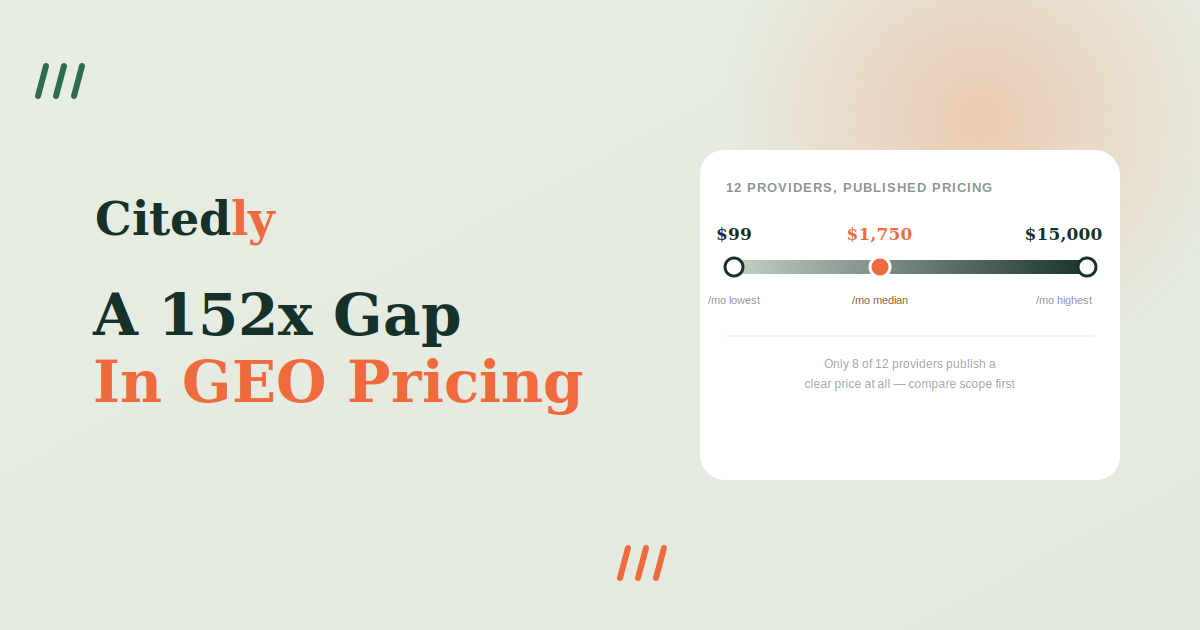
This is not a small decision, and I understand why companies resist it. But in a system that retrieves evidence, publishing a real range is the difference between being in the comparison and being absent from it. We took the same approach with our own GEO pricing breakdown for exactly this reason.
The Citedly AI Mode Readiness Checklist
Run this against your own site. Any no is a place to start.
| Question | Yes or no |
|---|---|
| Are your key pages indexed in Google? | |
| Does your main content appear in the raw HTML? | |
| Does each important buyer question have a direct answer near its heading? | |
| Do you cover pricing, comparisons and alternatives, not just the main term? | |
| Are your factual claims backed by specific, checkable evidence? | |
| Is your business clearly and consistently described across the web? | |
| Do credible third parties corroborate what you say about yourself? | |
| Do you track AI Mode prompts separately from rankings? |
Frequently Asked Questions About Google AI Mode
Is Google AI Mode the Same as AI Overviews?
No. AI Overviews are summaries inside the normal results page, while AI Mode is a separate conversational experience built for longer questions and follow-ups. They also pick sources differently. Semrush found AI Mode overlapped Google's top 10 on about 54% of domains, against about 86% for AI Overviews.
How Does Google AI Mode Choose Sources?
It runs several related searches behind one question, retrieves candidate pages, selects supporting passages, and synthesises an answer. Google has described this fan-out process but has not published the specific ranking signals that decide which sources survive, so treat anyone claiming to know the exact factors with caution.
Can I Rank Number One in Google AI Mode?
No. AI Mode produces a synthesised answer with sources rather than a numbered list, so there is no position one. Measure citation presence, brand mentions, recommendation inclusion and how many of your target prompts return you at all.
Does Schema Help With AI Mode?
Not as a special requirement. Google states that no special schema or markup is needed for generative AI features. Structured data is still worth having as part of ordinary SEO, including for rich results, but adding schema specifically to win AI Mode is not something Google supports.
Do I Need llms.txt for Google AI Mode?
No. Google explicitly says you do not need llms.txt, AI text files, special markup or Markdown to appear in its generative AI features. If a provider is selling llms.txt as an AI Mode tactic, that claim does not match Google's own guidance.
Can I Track AI Mode in Google Search Console?
Not cleanly. Google folds AI feature performance into overall Search reporting rather than giving AI Mode its own breakdown, so you cannot isolate it reliably. A manual prompt set run on a schedule is currently the most dependable method.
Does AI Mode Reduce Clicks to Websites?
The evidence says yes. A randomised, preregistered experiment with 1,100 US participants from the University of Pennsylvania and Northeastern University found AI Mode cut click-through rates to external sites by 18.8 percentage points. That is the clearest causal evidence available so far, rather than a correlation.
Do Google Rankings Still Matter for AI Mode?
Yes, but less directly than for AI Overviews. Only about 35% of the URLs AI Mode cited appeared in Google's top 10 for the same query in Semrush's sample. Ranking helps you get retrieved, but it neither guarantees inclusion nor is strictly required.
Where to Start
If you want one takeaway: stop optimising a page for a phrase and start asking what questions sit inside the phrase. Write down a real buyer prompt, list the six or seven things Google would need to resolve to answer it, then check honestly whether your site answers any of them well.
That exercise usually makes the gap obvious within twenty minutes, and it is the same exercise I run at the start of an engagement.
See If AI Mode Includes You
Run your real buyer prompts across five AI engines and find out where you get named, where a competitor does, and where nobody does, free, in about 60 seconds. Or book a call and we will map your fan-out gaps.
Keep exploring
Read More from Citedly
AI Visibility Guide
AI Crawlers: Complete List, Robots.txt Rules and Which Ones to Allow
Read article →