AI Visibility Guide
7 Search Console Checks I Run Before Any AI Visibility Work
7 Search Console Checks I Run Before Any AI Visibility Work
By Hadeel Yousaf, Founder of Citedly and LLM researcher
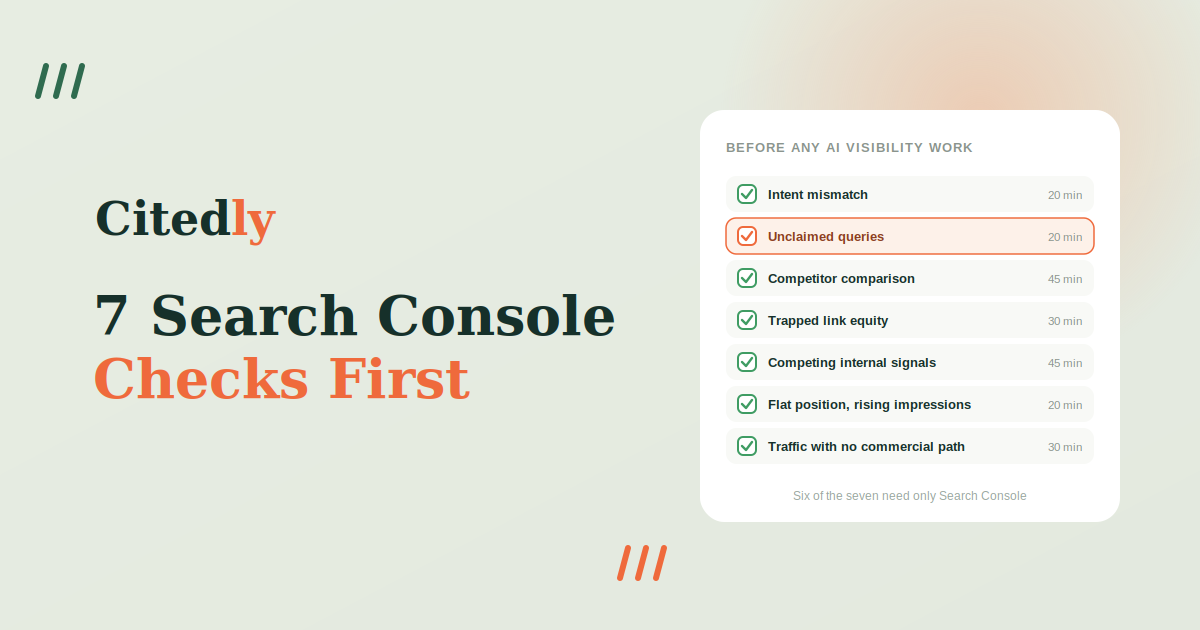
TL;DR: Most AI visibility problems are not AI problems. They are intent and structure problems that were already visible in Search Console before anyone mentioned ChatGPT. These seven checks surface them: intent mismatch, unclaimed queries, competitor gaps, trapped link equity, competing internal signals, flat positions on rising impressions, and traffic that never reaches a commercial page. Each one takes about twenty minutes and changes what you build next.
Key Takeaways
- Search Console already shows you most of what blocks AI retrieval, if you read it differently.
- A page ranking for the wrong intent will not be retrieved for the buying question.
- Queries you rank for but never targeted are the subtopics AI engines already associate with you.
- Link equity sitting on a blog post that links nowhere useful is wasted authority.
- Near-identical internal anchor text across pages blurs which page owns which topic.
- Rising impressions with a flat position usually means a new topic, not a weak page.
- Traffic with no path to a commercial page is the SEO version of a ghost citation.
Why I Start in Search Console, Not in an AI Tool
When someone asks me to improve their AI visibility, the first thing I open is not a prompt tracker. It is Search Console.
That surprises people, because the two feel unrelated. They are not. AI engines retrieve from the same web, judge the same pages, and reward the same things good search already rewarded: clear intent match, genuine topical coverage, and evidence that a claim is true. When a site is invisible in AI answers, the cause is usually something that was already measurable months earlier.
There is data behind that instinct. seoClarity analysed the top 1,000 URLs ChatGPT cited in late 2025 and found a quarter had no visibility in Google's top 100. That cuts both ways. Ranking does not guarantee citation, but the sites that get cited are usually the ones that resolved their structure problems rather than ignoring them.
What follows is the diagnostic sequence I actually run. Each check uses data you already have, and each one ends with the same question: what does this mean for whether a model can use this page?
Here is the whole sequence before we get into it, so you can skip to whichever one sounds like your problem.
| # | The check | What it finds | Time |
|---|---|---|---|
| 1 | Intent mismatch | Pages ranking for a different intent than they were built for | 20 min |
| 2 | Unclaimed queries | Topics Google already associates with you that you never targeted | 20 min |
| 3 | Competitor comparison | The specific need a rival's page satisfies that yours does not | 45 min |
| 4 | Trapped link equity | Linked-to pages that never pass value to a commercial page | 30 min |
| 5 | Competing internal signals | Pages blurring each other through near-identical anchor text | 45 min |
| 6 | Rising impressions, flat position | A new topic Google is testing you for, hiding as a weak page | 20 min |
| 7 | Traffic with no commercial path | High-traffic pages that lead nowhere the business benefits | 30 min |
None of these needs a new tool. Six of the seven need nothing but Search Console and your own site.
1. Is Your Page Ranking for the Wrong Intent?
Open Search Console, filter to one important landing page, and read the queries bringing it impressions. If a service page is collecting informational queries, or a blog post is collecting commercial ones, you have an intent mismatch.
The instinct is to rewrite the page. Do not start there.
What to Do Instead
Search those queries yourself and look at what type of page Google is actually ranking. If the first page is full of guides and yours is a pricing page, Google has told you what it thinks that query deserves. You may not need a rewrite. You may need a different page.
Why This Matters More for AI
Because an AI engine breaks one question into several, and retrieves separately for each one. A page that half-matches a commercial intent will lose to a page that fully matches it, on the specific sub-question where the buying decision gets made. That mechanism is covered in our AI SEO guide, and the AI Mode version in how AI Mode picks sources.
Mismatch is not a ranking inconvenience. It is the reason your best commercial page never enters the shortlist.
2. Which Queries Are You Ranking For Without Trying?
Go to Performance, then Queries, then filter for terms that do not appear in your page title or H1 but are still earning impressions. These are the topics Google already associates with your page, without you asking.
This is my favourite check, because the output is a content plan rather than a to-do list.
How to Read the Output
Group the queries by intent rather than by volume. The pattern you are looking for is several queries circling the same missing subject.
| What you find | What it usually means |
|---|---|
| Several queries about one subtopic you barely cover | A section is missing, or a page is |
| Queries phrased as questions | A FAQ or a dedicated answer block is missing |
| Queries with a commercial modifier like cost or vs | A comparison or pricing page is missing |
| One-off unrelated queries | Noise, ignore them |
"The queries you never targeted are the most honest feedback Google gives you. It is telling you what it already thinks you are about, and usually what you forgot to write."
Hadeel Yousaf, Founder of Citedly
Those clusters are also, almost exactly, the subtopics an AI engine will need resolved when someone asks a bigger question in your category.
Turning a Cluster Into a Page
Once you have a cluster, the page almost writes itself. Lead with a direct answer to the clearest query in the group, cover the rest of the group as its own section, and put a specific number or example in each one. That shape is what makes a passage quotable rather than merely correct, and the method is in structuring content for AI.
3. Why Does Google Keep Choosing a Competitor's Page?
Pick a keyword where you sit below a competitor and compare the two pages properly. Not a glance, a structured comparison.
I look at six things, in this order:
- Intent match. Does their page answer the actual question more directly?
- Depth. Do they resolve follow-up questions yours leaves open?
- Evidence. Do they cite data, name sources, show examples?
- Internal links. Is their page supported by other relevant pages, or orphaned?
- Topical coverage. Does the rest of their site back this page up?
- Freshness. When was each page genuinely updated, not just redated?
Do Not Copy, Diagnose
The mistake is matching their page feature for feature. The useful question is what need they satisfy that you do not. Sometimes it is one missing section. Sometimes their whole site covers the topic and yours covers it once.
Row three matters disproportionately for AI. The Princeton-led team that coined generative engine optimization tested nine content changes across roughly 10,000 queries and found adding statistics, citing sources and including quotations lifted visibility in AI answers by up to 40%, while keyword stuffing did nothing. Evidence is not decoration. It is the thing that makes a sentence liftable.
4. Are Your Backlinks Pointing at Pages That Lead Nowhere?
Pull the pages on your site with referring domains, then check whether those pages internally link to the commercial pages you actually care about. Very often they do not.
This is the most common wasted asset I find. A blog post earns twenty referring domains over two years, and every internal link on it points to three other blog posts.
The Fix Is One Line of Copy
Add a relevant, contextual link from the linked-to page into the page you want to strengthen. Not a sidebar widget, not a related-posts grid, an actual sentence in the body where the link makes sense to a reader.
Authority that cannot travel is authority you do not have. For a site with few links to begin with, routing the ones you do have is often worth more than chasing new ones, which is the same argument behind earning third-party mentions rather than only publishing.
5. Are Your Internal Links Competing With Each Other?
Map your main keywords to the one URL that should own each, then review the anchor text pointing at them. When several pages target similar terms and link to each other with near-identical anchors, you have blurred which page owns what.
Give every important page a defined role. One page owns the definition, one owns the comparison, one owns pricing, and the anchors reflect that difference.
Why This Shows Up in AI as a Naming Problem
A site that cannot tell a search engine which page owns which topic usually cannot tell a model which entity owns which claim either. That turns up as being cited without being named, which has a name of its own.
A Semrush study with Kevin Indig in June 2026 analysed 3,981 brand appearances across ChatGPT, AI Overviews, Gemini and AI Mode and found 61.7% were ghost citations, where the source was linked but the brand was never named. Only 13.2% got both. Our breakdown of ghost citations covers what to do about it, and the difference between the two signals is in citations vs mentions.
Clear internal structure is not only a crawling nicety. It is part of how a model works out who you are.
6. Are Impressions Rising While Your Position Stays Flat?
This is the check almost nobody runs, and it is the most interesting one in Search Console.
If a page's impressions climb while its average position barely moves, the page is not getting stronger. It is being shown for a wider set of queries. Google has started associating it with more topics.
Read It as a Discovery, Not a Problem
The wrong response is to optimise the existing page harder. The right response is to segment the new queries by intent and ask whether they describe something you have not built yet.
| Signal | Likely meaning | Action |
|---|---|---|
| Impressions up, position flat, same topic | Broader query matching on one subject | Expand the existing page |
| Impressions up, position flat, new subtopics | Google sees a new topic in your page | Build a dedicated page |
| Impressions up, position falling | You are matching queries you cannot satisfy | Check intent match first |
That middle row is where new content ideas come from, and they are better than anything a keyword tool will hand you, because Google has already confirmed the association exists.
7. Is Your Best Traffic Reaching Anything Commercial?
Find the pages bringing the most organic traffic, then trace what they link to and whether visitors continue anywhere. A blog can produce thousands of visits a month and contribute nothing.
Ask three questions about each high-traffic page:
- Which commercial page does it link to, in the body, in context?
- Does that link appear before the reader is likely to leave?
- Is the next page actually relevant to the reason they arrived?
The Parallel Worth Noticing
Traffic that never reaches a commercial page is the SEO version of a ghost citation. The content did its job, the brand got nothing. In both cases the fix is the same in spirit: make sure the useful thing and the business behind it are connected.
"Being useful and being chosen are two different outcomes. Most sites optimise relentlessly for the first and leave the second to chance."
Hadeel Yousaf, Founder of Citedly
How These Checks Map to AI Visibility
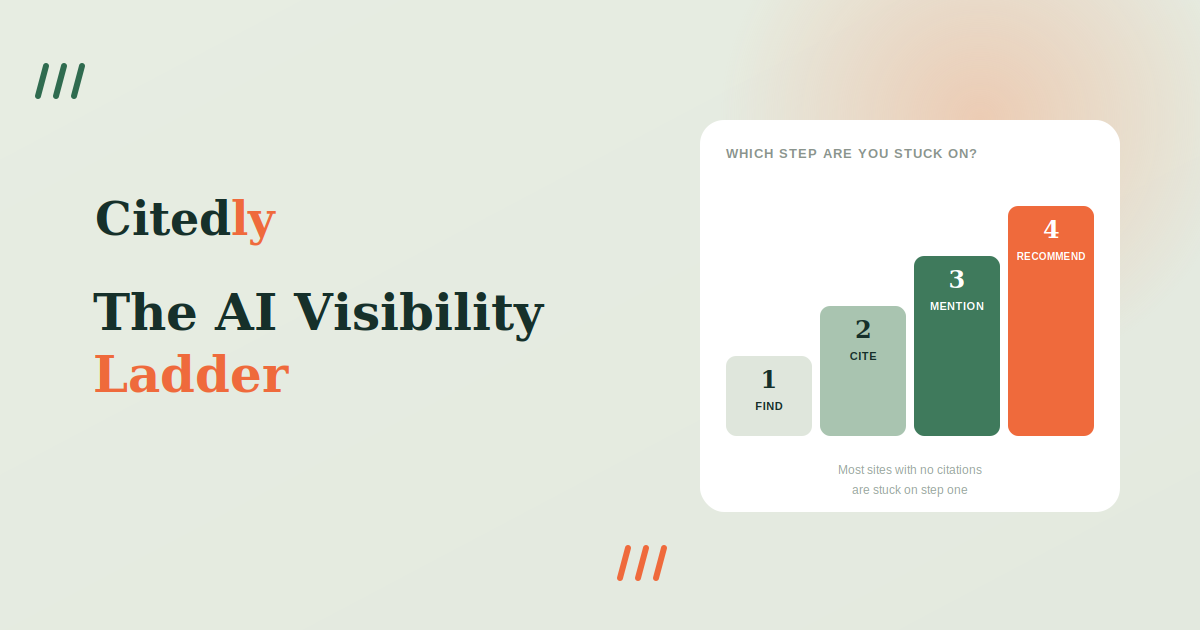
I use a four-stage model when I audit a site: Find, Cite, Mention, Recommend. Each of these checks sits on one of those stages, which is how I decide what to fix first.
| Check | Stage it affects |
|---|---|
| Intent mismatch | Cite |
| Unclaimed queries | Cite |
| Competitor comparison | Cite |
| Trapped link equity | Find and Mention |
| Competing internal signals | Mention |
| Impressions up, position flat | Cite |
| Traffic without a commercial path | Recommend |
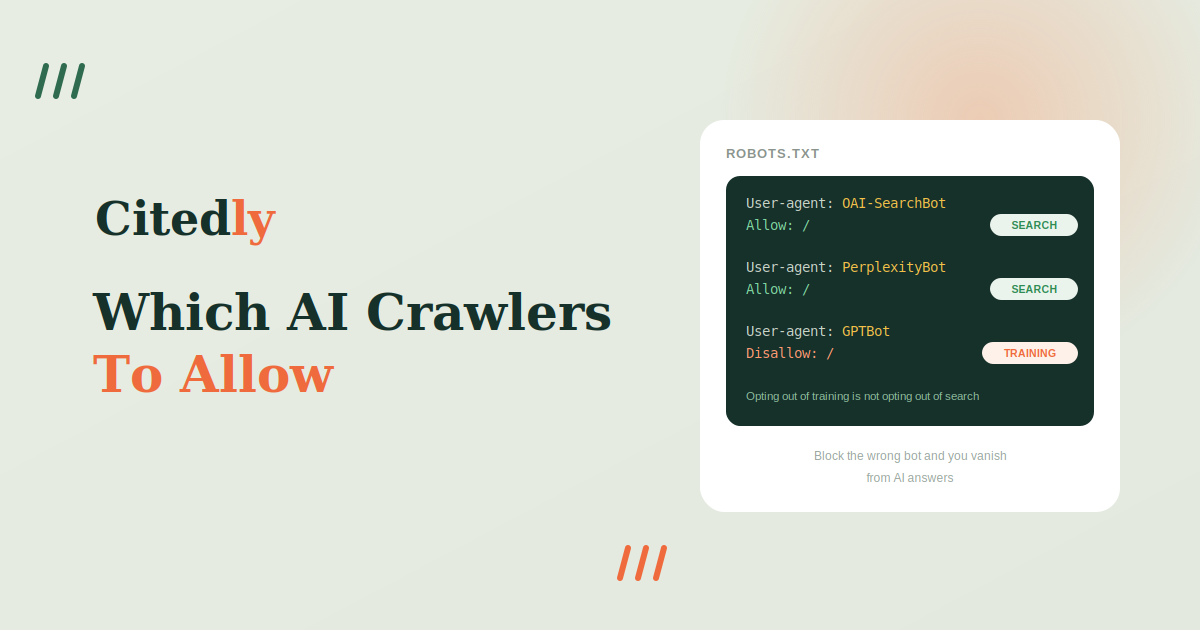
Nothing in this list is a Find-stage fix, which is deliberate. If AI crawlers cannot reach your site at all, none of this matters yet, and that is a different diagnostic covered in why AI isn't citing your website and the AI crawlers reference. The full model is in the AI Visibility Ladder.
Does Traditional SEO Still Decide AI Visibility?
Partly, and the honest answer is more nuanced than either side of that argument usually admits.
Rankings do not transfer cleanly. Semrush's study of 5,000 keywords found Google AI Mode overlapped Google's top 10 on about 54% of domains and only about 35% of URLs. So being in the top 10 is neither required nor sufficient.
But the underlying work is the same work. Ahrefs studied 75,000 brands and found branded web mentions correlated with AI visibility at 0.664 against 0.218 for backlink counts, which says reputation and clarity matter more than link volume. Every check on this page improves clarity.
That is why I run them first. Not because AI visibility is just SEO, but because a site that fails these checks will fail at the Cite stage no matter how much prompt tracking you buy.
Once the structure holds up, measurement is worth setting up properly, and tracking your AI citations covers the free way to do it.
Frequently Asked Questions
How Often Should I Run These Checks?
Quarterly for most sites, monthly if you publish often. Search Console data needs time to accumulate before patterns are readable, and reacting to two weeks of data usually means reacting to noise. The exception is after a redesign or migration, when I would check intent match and internal linking within a fortnight.
How Much Search Console Data Do I Need?
At least three months, ideally six. Query-level patterns are unreliable below that, especially on a smaller site where single-digit impression counts dominate. If your property is newer than three months, run the competitor comparison and internal linking checks, which do not depend on your own history.
Will Fixing These Actually Improve AI Citations?
It improves the odds rather than guaranteeing an outcome, and anyone promising more than that is overselling. These checks remove the reasons a model would pass over your page. Whether it then cites you also depends on crawler access, your competition, and third-party corroboration you do not control.
Which Check Should I Do First?
Number two, the unclaimed queries. It takes the least time, it needs no competitor research, and it produces a concrete list of things to build rather than a list of things to fix. Momentum matters when you are doing this alongside running a business.
Do I Need Paid Tools for Any of This?
Only for check four, which needs backlink data from Ahrefs or Semrush. The other six run entirely on Search Console and your own site. If you cannot access backlink data, skip it and come back later rather than guessing.
Is This Different From a Normal SEO Audit?
Yes, in what it is looking for. A standard audit inventories errors. This sequence asks whether your pages match the intent behind the questions people ask, and whether your site structure makes clear which page answers what. Those are the things that decide retrieval, and most audit tools do not test for them.
Where to Start This Week
Pick one important page, open Search Console, and run checks one and two on it. Twenty minutes, no tools, no budget. You will come away with either an intent problem or a list of subtopics Google already associates with you, and both are more useful than another keyword export.
If you want this run across a whole site, with the AI visibility side mapped on top of it, that is what we do at Citedly, starting at $299 per month with no contract.
See What AI Does With Your Site Today
Run your real buyer prompts across five AI engines and find out where you get named, where a competitor does, and where nobody does, free, in about 60 seconds. Or book a call and we will run these checks with you.
Keep exploring
Read More from Citedly
AI Visibility Guide
How to Hire an AI SEO Agency (and Why No One Can Guarantee Citations)
Read article →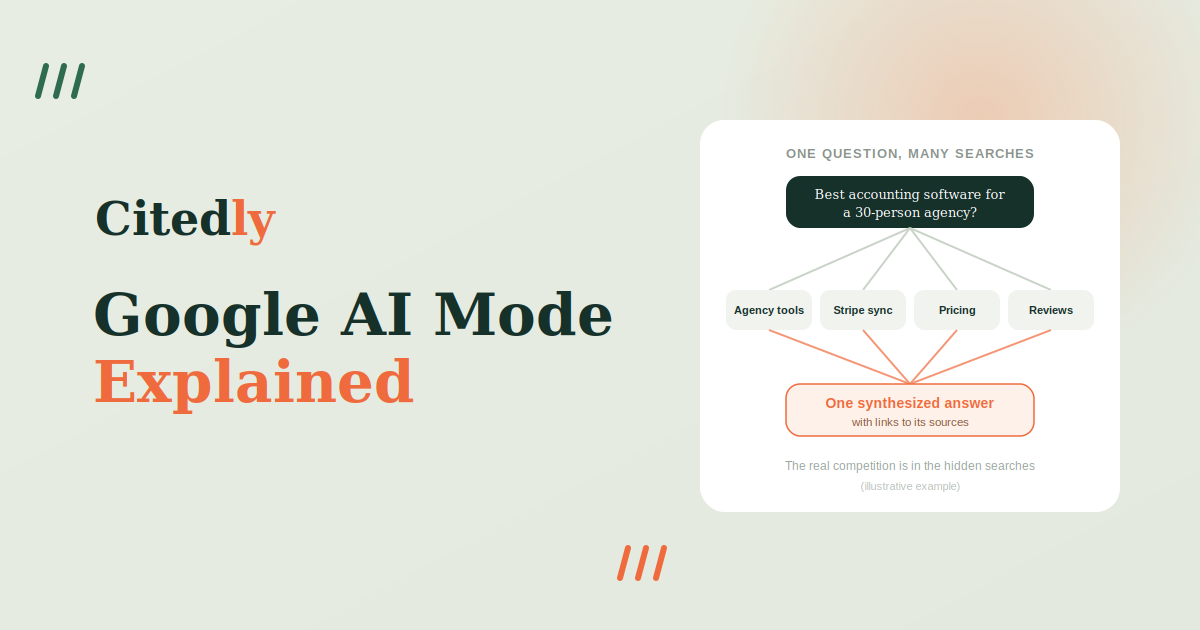
AI Visibility Guide
AI Crawlers: Complete List, Robots.txt Rules and Which Ones to Allow
Read article →